
Disclosure: Some links in this post are affiliate links. If you sign up through them, I may earn a commission at no extra cost to you. I only recommend platforms and tools I personally use.
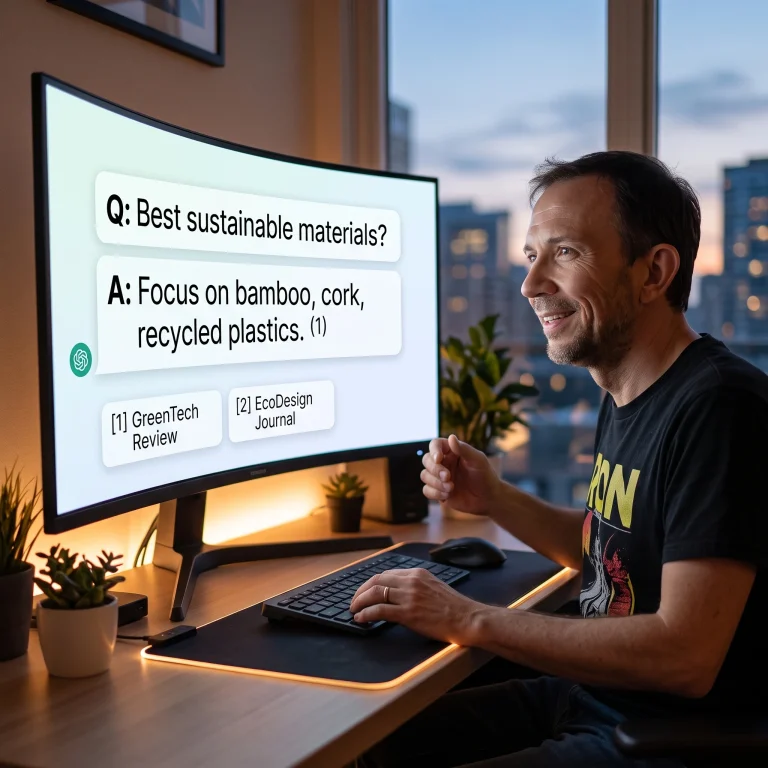
What is generative engine optimization? Generative Engine Optimization (GEO) is the practice of making your content easy for AI systems — ChatGPT, Perplexity, Gemini, and Google’s AI Overviews — to understand, summarize, and cite as a source. Instead of only chasing rankings, GEO helps your content get pulled INTO the answers people read. Written by a full-time affiliate marketer with 13+ years of hands-on search experience.
Hey, it’s Scott! 👋
Welcome to Part 2 of my SEO → GEO → AEO series.
In Part 1, we covered what SEO looks like in 2026 — the foundation everything else builds on.
Now we’re going deeper into the piece everyone’s talking about, but almost nobody explains well: GEO.
Because here’s the 2026 reality: more and more people never click a blue link at all. They ask an AI, read the answer, and move on.
The question is no longer just “how do I rank?” It’s “how do I get cited inside the answer?”
That’s GEO. Let’s break it down in plain English — including what the actual research says works.
🚀 Jump to any section 👇
1🤝 Why You Can Trust This Guide
3🎓 Where GEO Came From (The Research)
4🔍 How AI Engines Pick What To Cite
Why You Can Trust This Guide

I’ve been building websites since 2012 and earning online since 2013.
I’ve adapted through every search era — and the AI-answer era is just the newest one.
But here’s the part that matters more: you’re reading a GEO-optimized page right now.
The direct-answer box at the top of this post? That’s GEO in action.
The question-based headings, the FAQ, the clean structure, the cited sources? All GEO.
I don’t just write about this stuff — every post on this site is built with it.
So this guide is the system I actually run, not a theory I read somewhere.
What GEO Actually Means (Plain English)
GEO stands for Generative Engine Optimization.
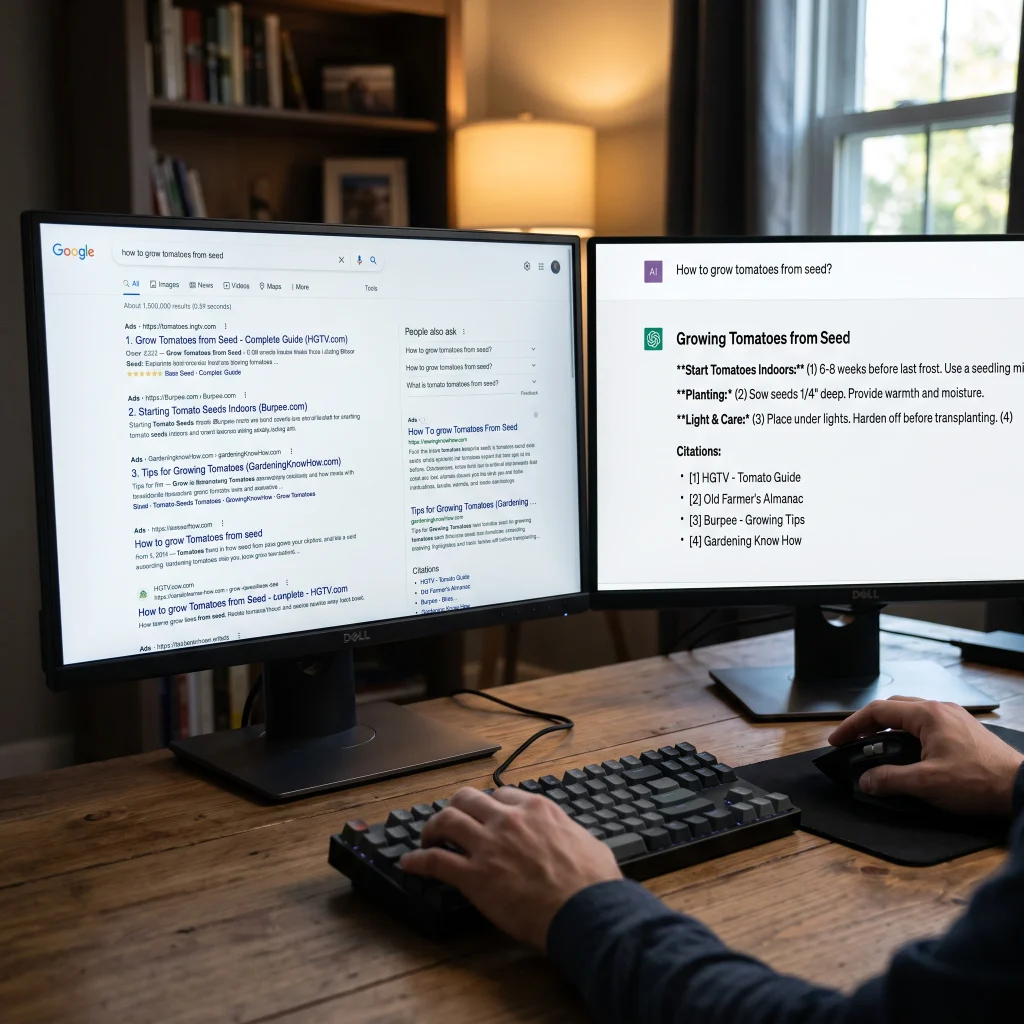
A “generative engine” is any AI system that answers questions by generating a response.
This includes ChatGPT, Perplexity, Gemini, Copilot, and Google’s AI Overviews.
These engines don’t show ten blue links.
They read multiple sources, synthesize them, and produce ONE answer — often with citations to where the information came from.
GEO is the practice of making YOUR content one of the sources those engines pull from and cite.
Think of it this way:
- SEO = getting your page listed in the results
- GEO = getting your content used inside the answer
Same goal — being found. Different battlefield.
Where GEO Came From (Yes, There’s Actual Research)
Here’s something most “GEO guides” never tell you: the term isn’t marketing fluff. It came from actual academic research.
In November 2023, a research team from Princeton, Georgia Tech, the Allen Institute for AI, and IIT Delhi published a paper literally titled “GEO: Generative Engine Optimization” — the paper that coined the term.
They didn’t just name it. They tested it.
The team built a benchmark of 10,000 real queries and tested nine different content strategies to see which ones actually increased visibility in AI-generated answers.
The headline result: the right optimizations boosted content visibility in generative engine responses by up to 40%.
And the two strategies that performed best?
- Adding quotations from authoritative sources
- Adding relevant statistics with real numbers
Keep those two in your back pocket — they show up again in the how-to section below.
How AI Engines Pick What To Cite
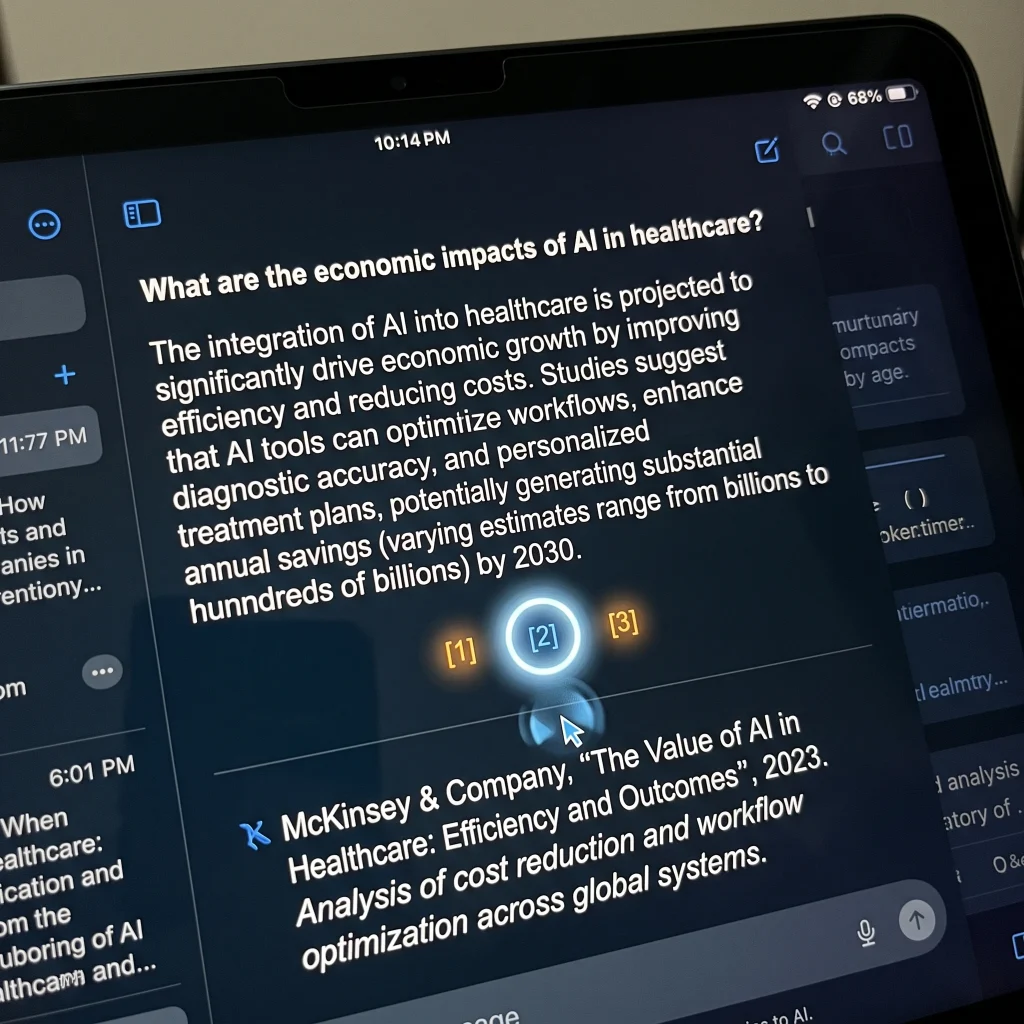
Nobody outside these companies knows the exact recipe — AI engines are black boxes, and they change constantly.
But between the research, Google’s own guidance, and watching what actually gets cited, clear patterns show up:
Direct answers get lifted– Content that answers the question in the first lines is easy to quote.
Buried answers get skipped.
Clear structure gets understood– Headings that match real questions, short paragraphs, lists; machines parse these the same way skimming humans do.
Specifics beat vagueness– Numbers, dates, named sources, and concrete claims are citable.
“Many experts believe” is not.
Trust patterns matter– Consistent publishing, topical depth, and clean internal linking make a site feel safe to cite, the same trust pattern that Part 1 covered for SEO.
Real experience stands out– Google’s own AI-content guidance is blunt about this: E-E-A-T.
Experience, expertise, authoritativeness, trust.
These things matter regardless of how content gets produced.
First-hand experience is the one thing generic content can never fake.
Notice the theme: everything that makes content easy for a human to trust makes it easy for an AI to cite.
GEO vs SEO: What Carries Over & What’s New
Good news if you read Part 1: you’re not starting over. GEO builds directly on the SEO foundation.
✅ Carries over from SEO
Search intent matching
Clear structure & headings
Topical depth & clusters
Internal linking
Trust signals & real experience
🆕 New with GEO
Being quotable, not just rankable
Leading with direct answers
Citing stats & sources in-content
Writing standalone, liftable lines
Optimizing to be summarized
That’s why this series goes SEO first, GEO second. If you skipped Part 1, start there — GEO without the SEO foundation is a roof without walls.
Want to see where I learned all of this?
Everything I know about search — SEO, content structure, and now the AI era — I learned and still sharpen inside Wealthy Affiliate, 13 years in. The free Starter account includes 4,000 AI credits, no credit card required.
🎓 Read My 13-Year Wealthy Affiliate Review →How To Optimize For Generative Engines: 7 Moves To Make Your Content AI-Citable

Here’s the practical playbook — each move is something you can apply to your very next post.
1) Lead With A Direct Answer Block
Put a 2–4 sentence plain-English answer to the main question at the very top of the post.
You saw one at the top of this page. That box is the single most liftable piece of content on the page, for AI engines AND for skimming humans.
2) Add Real Statistics (With Sources)
This was one of the two top-performing strategies in the Princeton research.
Concrete numbers give AI engines something specific to cite. “Optimized content saw up to 40% more visibility” is citable. “Optimization helps a lot” is noise.
3) Quote Authoritative Sources
The other top performer from the research.
Referencing and linking real authorities — official documentation, research papers, primary sources — signals that your content is sourced, not made up. Engines reward content that behaves like a good source itself.
4) Write Standalone, Liftable Lines
AI engines quote sentences, not vibes.
Make your key claims work as single sentences that hold up out of context. “Trust isn’t a badge. It’s a pattern.” travels. A 60-word run-on doesn’t.
5) Use Question-Based Headings + FAQ
Your H2s and H3s should read like the questions people actually ask — because that’s what AI engines are answering.
A tight FAQ section extends this even further. (This overlaps heavily with AEO — that’s Part 3’s whole territory.)
6) Keep Structure Machine-Clean
Short paragraphs.
Clear lists.
Proper heading hierarchy.
Schema where it fits.
Everything from Part 1’s clarity section applies double here.
A page that’s easy to skim is a page that’s easy to summarize.
7) Build The Pattern (Clusters + Consistency)
One great post rarely earns citations on its own.
Engines cite sites that show a PATTERN of covering a topic well.
This includes connected clusters, consistent publishing, internal links that map the territory.
This very series (SEO → GEO → AEO, all interlinked, all under one Traffic & SEO hub) is that pattern being built in public.
GEO Mistakes To Avoid
Publishing generic AI sludge. Engines are drowning in it. Generic content has nothing worth citing — your experience is the differentiator.
Making claims with no sources or numbers. Unsupported content is the least citable content on the internet.
Burying the answer. If your main point shows up in paragraph fourteen, no engine (and no human) is digging for it.
Chasing “AI hacks.” There’s no secret markup or magic phrase. Anyone selling one is selling smoke.
Skipping the SEO foundation. GEO amplifies content that’s already discoverable. It can’t rescue content that isn’t.
The Future Of AI Search (And Why GEO Compounds)

AI answers aren’t going away; they’re becoming the default first stop for a growing share of searches.
That scares many site owners.
I get it. Fewer clicks is a real thing; it’s exactly why I built a whole guide on driving traffic beyond Google in the first place.
But here’s the flip side: when an AI engine cites you, you’re not one of ten results anymore; you’re one of TWO or THREE sources in the only answer the person reads.
Being citable in 2026 is what ranking #1 was in 2016.
Smaller doorway, way more valuable.
And the sites winning citations are building the same thing that wins everywhere else: real experience, clean structure, consistent depth, and content worth quoting.
That work compounds across Google, AI engines, and every platform at once, which is the whole “search everywhere” philosophy from my 7-step playbook.
What Is Generative Engine Optimization (GEO) in 2026: FAQ
What is GEO in 2026?
GEO, or Generative Engine Optimization, is the practice of making your content easy for AI systems like ChatGPT, Perplexity, Gemini, and Google’s AI Overviews to understand, summarize, and cite as a source in their generated answers.
What is the difference between GEO and SEO?
SEO helps your content rank in traditional search results, while GEO helps your content get pulled into and cited by AI-generated answers. GEO builds on the SEO foundation rather than replacing it, and the strongest content in 2026 does both.
How do I get my website cited by ChatGPT and AI search engines?
Lead with direct answers, add real statistics and quotations from authoritative sources, use question-based headings, keep structure clean, and build consistent topical depth. Research shows these optimizations can boost visibility in AI answers by up to 40 percent.
Does GEO replace SEO?
No. GEO builds on top of SEO. Your content still needs to be discoverable, structured, and trusted to compete at all — GEO then makes that same content easier for AI engines to interpret, summarize, and cite.
Do AI citations actually send traffic?
Citations can send fewer clicks than a traditional top ranking, but they carry outsized visibility and trust because you appear as a named source inside the answer itself. Being one of a few cited sources is more valuable per impression than being one of ten blue links.
What content works best for GEO?
Content with direct answers near the top, real statistics, quoted sources, clear question-based structure, and genuine first-hand experience. Generic content without specifics gives AI engines nothing worth citing.
🏁 The Bottom Line
GEO isn’t a replacement for SEO — it’s the next layer on top of it. AI engines cite content that answers fast, backs claims with real numbers and sources, and comes from sites with genuine, consistent depth. The research says it plainly: quotations and statistics move the needle, generic sludge doesn’t. Build content worth citing, and the AI era becomes an opportunity instead of a threat.
Want the full system — SEO foundations, traffic beyond Google, and everything in between? The hub connects it all.
🧭 Explore The Traffic & SEO Hub →💬 Your Turn — Let’s Chat!
Are you seeing AI Overviews eat into your traffic — or have you spotted your own content cited in an AI answer yet? Drop it in the comments — I personally reply to every one, and your questions are already shaping Part 3.
Until next time — stay focused, stay real.
To your success,
– Scott Newkirk
📚 The SEO → GEO → AEO Series
You’re Reading Part 2
You’ve got the foundation and the citation layer. One layer left: becoming the answer itself.
← Part 1: What Is SEO? Continue to Part 3: What Is AEO? →Keep Reading: Put This Into Practice
GEO works best on top of a strong foundation — these guides build it.
👉 What Is SEO in 2026? Search Has Changed More Than You Think
👉 How To Drive Traffic In 2026: Step-by-Step Beyond Google
👉 How To Succeed In Affiliate Marketing In 2026 (7-Step Playbook)