

Disclosure: Some links in this post are affiliate links. If you sign up through them, I may earn a commission at no extra cost to you. I only recommend platforms and tools I personally use.
What is answer engine optimization? Answer Engine Optimization (AEO) is the practice of structuring your content so that answer engines — Google’s AI Overviews, featured snippets, voice assistants, ChatGPT, and Perplexity — select it as the direct answer to a specific question. SEO gets you found and GEO gets you cited; AEO makes you THE answer people actually receive. Written by a full-time affiliate marketer with 13+ years of hands-on search experience.
Hey, it’s Scott! 👋
Welcome to Part 3 — the finale of my SEO → GEO → AEO series.
In Part 1 we covered the SEO foundation, and in Part 2 we broke down GEO — how to get your content cited by AI.
Now we finish with the sharpest layer of the whole stack: becoming the answer itself.
Because here’s the uncomfortable 2026 stat: most Google searches now end without a single click.
People ask, they get an answer, and they move on. The question is whether that answer comes from YOUR content — or somebody else’s.
That’s what AEO decides. Let’s break it down.
🚀 Jump to any section 👇
1🤝 Why You Can Trust This Guide
3📜 Where AEO Came From (Before AI)
4⚙️ How Answer Engine Optimization Works
5🧱 SEO vs GEO vs AEO: The Full Stack
6✍️ 7 Moves To Become The Answer
Why You Can Trust This Guide

I’ve been building websites since 2012 and earning online since 2013.
And just like the first two parts of this series, you’re looking at AEO in action right now.
The direct-answer box at the top of this page? That’s AEO.
The question-based headings, the FAQ with schema behind it, the jump box that mirrors how people actually ask? All AEO.
Every post on this site runs this exact system.
This guide isn’t theory I collected — it’s the structure I build every week.
What AEO Actually Means (Plain English)

AEO stands for Answer Engine Optimization.
An “answer engine” is anything that responds to a question with a direct answer instead of a list of links.
That includes Google’s featured snippets and AI Overviews.
This also includes voice assistants like Siri and Alexa, as well as AI chat tools like ChatGPT, Perplexity, and Copilot.
AEO is the practice of structuring your content so those engines pick YOUR answer.
And here’s the insight that separates AEO from everything else in this series:
In AEO, the unit of optimization isn’t the page; it’s the individual answer.
A definition. A statistic. A step. A comparison.
Any one of those can become the cited answer to a question, without your whole page needing to “rank” in the classic sense.
You’re not optimizing a document anymore.
You’re building a collection of liftable answers.
Where AEO Came From (It’s Older Than You Think)
Here’s something most guides get wrong:
AEO is NOT a new AI-era invention.
It was born years before ChatGPT existed.
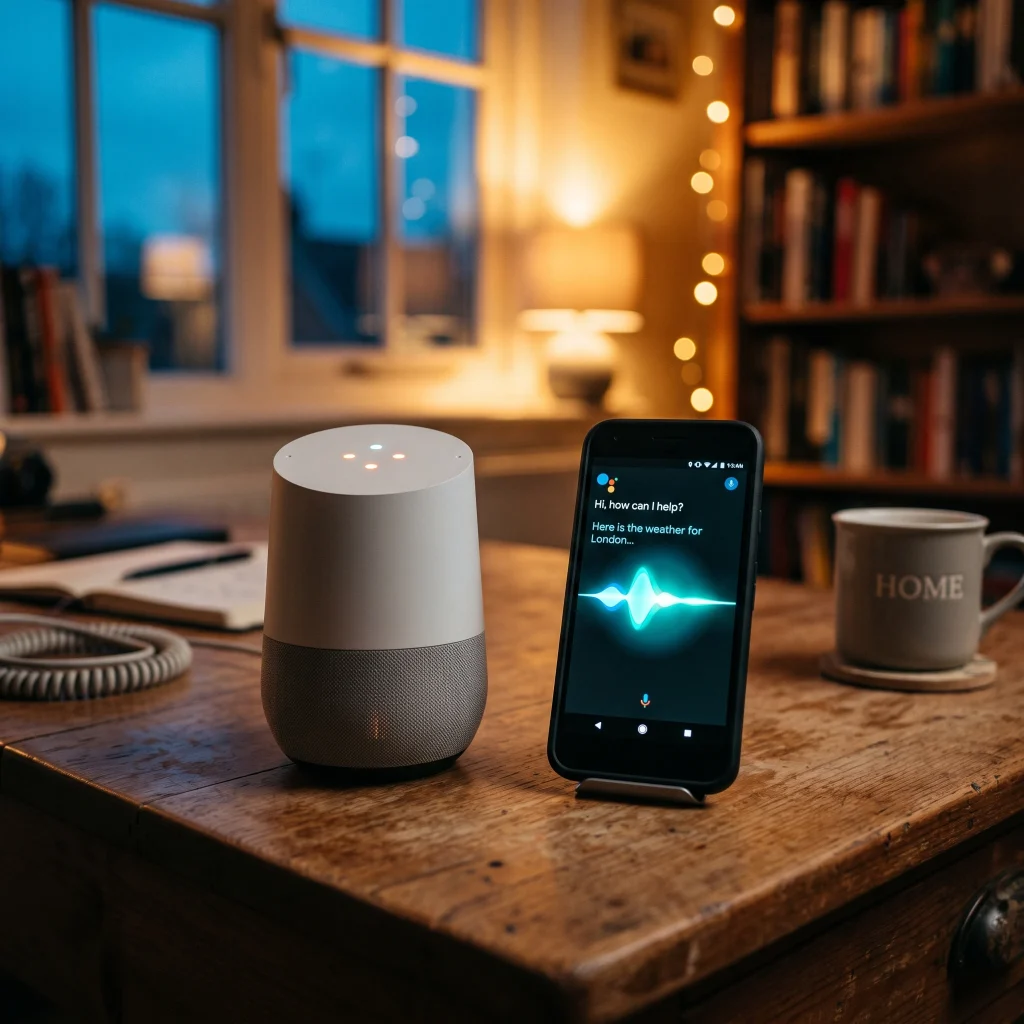
With Google’s featured snippets (those answer boxes at the top of search results) and voice assistants reading single answers out loud.
When Alexa answers a question, she doesn’t read you ten links.
She reads ONE answer.
Somebody’s content got picked.
That was AEO’s first era: win the snippet, win the voice answer.
The AI wave didn’t replace that game; it supercharged it.
Now every AI Overview, every ChatGPT response, every Perplexity answer is playing the same “pick one answer” game at massive scale.
So if you’ve ever optimized for a featured snippet, you’ve already done AEO.
The discipline just got a much bigger stage.
How Answer Engine Optimization Works (And Why It Matters Now)

The numbers explain why AEO went from “nice to have” to “survival skill.”
According to Similarweb clickstream data, roughly 68% of Google searches now end without a click to any external site.
Zero-click search isn’t coming — it’s the mainstream.
Meanwhile, ChatGPT alone serves hundreds of millions of users every week.
AI-referred traffic to websites has been growing at triple-digit percentages year over year.
Put those together, and the picture is clear: a huge share of your potential audience gets their answer WITHOUT visiting anyone’s site.
So how does an answer engine actually pick its answer?
The patterns are consistent across every citation study.
It looks for a direct match to the question — content whose heading and first lines mirror the question.
It favors extractable formatting — a tight 2–4 sentence answer, a clean list, a table it can lift without guessing.
It checks for supporting evidence — sources, stats, and real-world experience to back up the answer.
It strongly prefers fresh content.
The AirOps 2026 State of AI Search report found that 83% of AI citations for commercial queries came from pages updated within the past 12 months.
Also, over 60% were updated within the last six months.
That last one deserves a highlight: freshness isn’t a bonus in AEO; it’s a filter.
Stale pages don’t just rank lower; they stop getting picked at all.
SEO vs GEO vs AEO: The Full Stack, Finally Complete
Three posts later, here’s the whole picture in one place:
🔍 SEO — The Discovery Layer
Gets your content found, indexed, and trusted in search. The foundation everything else stands on. (Part 1)
🤖 GEO — The Citation Layer
Gets your content understood, summarized, and cited by AI engines when they compose answers. (Part 2)
🎯 AEO — The Answer Layer
Gets a specific piece of your content selected as THE direct answer — in snippets, voice responses, and AI answers. (You’re here.)
How does answer engine optimization differ from traditional SEO?
Traditional SEO competes for position on a results page.
AEO competes for selection as the answer itself.
You need both — and they feed each other.
A page has to be discoverable and trusted (SEO) before it’s citable (GEO).
Furthermore, it has to be citable before any single answer within it is selected (AEO).
It’s one stack, not three separate strategies.
The strongest content in 2026 climbs all three layers at once.
Want to see where I learned all of this?
Everything in this series — SEO, GEO, AEO, and the content system behind this whole site — I learned and still sharpen inside Wealthy Affiliate, 13 years in. The free Starter account includes 4,000 AI credits, no credit card required.
🎓 Read My 13-Year Wealthy Affiliate Review →How To Optimize For Answer Engines: 7 Moves To Become The Answer
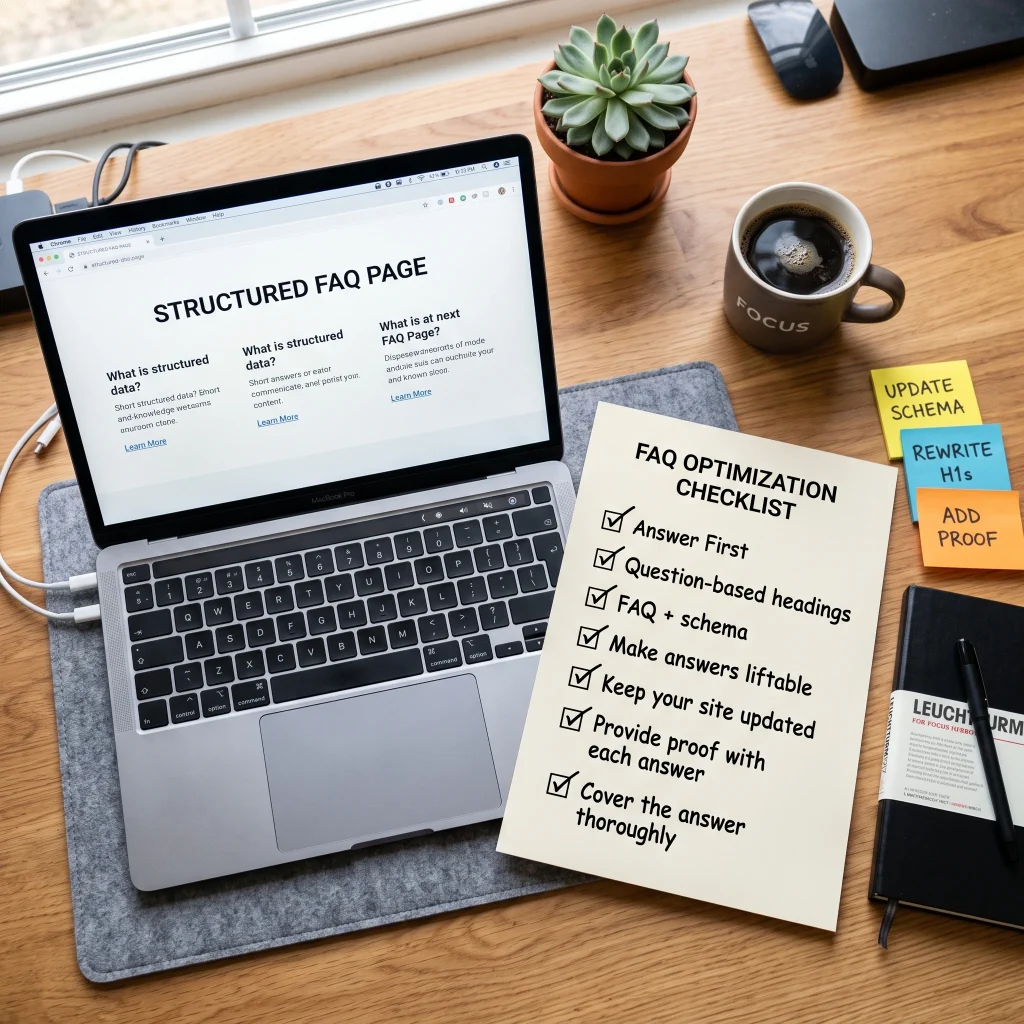
Here’s the practical playbook — the same moves running on this page right now.
1) Answer First, Explain Second
Every question your content targets should get a direct 2–4 sentence answer BEFORE the backstory.
That’s the snippet format: answer engines want something they can lift whole. Give the answer, then earn the deep-dive.
2) Write Question-Shaped Headings
Your H2s and H3s should mirror the exact questions people ask — because that’s the matching game answer engines play.
“What is AEO?” beats “My Thoughts On Modern Search.” Every heading is a doorway to an answer.
3) Build A Real FAQ (With Schema Behind It)
A tight FAQ section is pure AEO — a stack of question-answer pairs formatted exactly the way engines consume them.
Back it with FAQPage schema so machines read it without guessing. Citation studies consistently show that the FAQPage, HowTo, Article, and Author schemas carry the most weight — as covered in Part 1’s schema section.
4) Keep Answers Standalone And Liftable
Each answer should make sense pulled out of context — because that’s exactly what happens to it.
Name the subject in the answer (“AEO is…” not “It’s…”), keep one idea per sentence, and let every key claim survive alone.
5) Update Like It’s A Filter — Because It Is
Remember the 83% stat: answer engines overwhelmingly pick recently updated pages.
A refresh cadence isn’t housekeeping anymore — it’s how you stay eligible. Date your updates, revise stale claims, and keep your best answers current.
6) Support Every Answer With Evidence
Engines pick answers they can defend: stats with sources, named research, real first-hand experience.
This is where AEO and GEO’s citation strategies overlap completely — quotations and statistics make selecting answers safer.
7) Cover The Follow-Up Questions Too
Every question has children: “what is it” leads to “how does it work,” “does it replace X,” “how do I start.”
Cover the family, not just the parent — that’s how one page becomes the answer to a dozen related searches, and how topical depth (the cluster system from Part 1) pays off at the answer layer.
AEO Mistakes To Avoid
Burying the answer under a story. If the direct answer arrives in paragraph twelve, the engine already picked someone else’s paragraph one.
Treating AEO as a formatting pass. Bolting an FAQ onto a page built for the wrong intent doesn’t fix the intent. Structure amplifies substance; it can’t replace it.
Vague, hedgy answers. “It depends on many factors” gets skipped. Commit to a clear answer, then add the nuance underneath.
Letting content go stale. The freshness filter is real. Last year’s page loses to this month’s page, almost every time.
Skipping the foundation. AEO sits atop SEO and GEO. An undiscoverable, uncitable page never gets the chance to be the answer.
The Future Of Answer Engines (And Your Move)

The answer layer is only getting bigger.
Google now reports generative-AI performance right inside Search Console — meaning your visibility in AI answers is officially measurable, the same place you already track rankings.
When platforms build measurement tools for something, that’s your signal: this isn’t a trend, it’s infrastructure.
And the winning move hasn’t changed across this entire series: real experience, clean structure, honest depth, and content built to be USED.
By readers, by search engines, by AI, by everyone.
Fewer clicks per search is the reality — which is exactly why the smart play is being findable EVERYWHERE answers happen: search, AI, social, video, email.
That’s the “search everywhere” philosophy from my 7-step playbook, and it’s why my traffic system never relies on a single channel.
Master all three layers, and the AI era stops being the thing that took your clicks — and becomes the thing that put your answers in front of more people than blue links ever did.
What Is Answer Engine Optimization: FAQ
What is answer engine optimization in 2026?
Answer engine optimization (AEO) is the practice of structuring content so that answer engines — featured snippets, voice assistants, AI Overviews, and AI chat tools — select it as the direct answer to a specific question. It focuses on making individual answers clear, extractable, evidenced, and current.
How does answer engine optimization work?
Answer engines match questions to the clearest, most extractable answer they can defend. AEO works by leading with direct answers, using question-shaped headings, backing claims with evidence, adding FAQ and schema markup, and keeping content updated — since engines heavily favor fresh pages.
What is the difference between AEO, GEO, and SEO?
SEO is the discovery layer that gets content found and trusted in search. GEO is the citation layer that gets content summarized and cited by AI engines. AEO is the answer layer that gets a specific piece of content selected as the direct answer. They stack together rather than compete.
Does AEO replace traditional SEO?
No. AEO extends traditional SEO rather than replacing it. Content still needs to be discoverable, structured, and trusted before any answer inside it can be selected. Strong pages in 2026 do both — they rank in classic search and win the answer layer.
Why is answer engine optimization important in 2026?
Because most searches now end without a click, and a growing share of questions get answered by AI tools and voice assistants. If your content isn’t structured to be the answer, the visibility goes to a competitor whose content is — even when your page technically ranks.
How do I start with answer engine optimization?
Start with your existing content: add a direct answer at the top of each post, rewrite headings as real questions, add an FAQ with schema, refresh outdated pages, and support key claims with sources. Those five moves cover most of AEO’s impact without new tools or new content.
🏁 The Bottom Line
AEO is the sharpest layer of modern search: the practice of making your content THE answer, not just A result. It rewards direct answers, question-shaped structure, real evidence, and relentless freshness — and it punishes buried points, vague hedging, and stale pages. Stack it on top of SEO and GEO, and you’ve got the complete 2026 visibility system.
The full stack — foundations, citations, answers, and the traffic system that ties it together — all lives in one place.
🧭 Explore The Traffic & SEO Hub →💬 Your Turn — Let’s Chat!
That’s the trilogy complete — SEO, GEO, and AEO, front to back. Which layer are you working on right now? Have you spotted your content in a snippet or an AI answer yet? Drop it in the comments — I personally reply to every one.
Until next time — stay focused, stay real.
To your success,
– Scott Newkirk
📚 The SEO → GEO → AEO Series
You’ve Reached The Finale 🏆
This completes the full stack. If you jumped in here, start from the foundation and work your way back up.
Part 1: What Is SEO? → Part 2: What Is GEO? →Keep Reading: Put This Into Practice
The answer layer works best on a strong foundation — these build it.
👉 What Is SEO in 2026? Search Has Changed More Than You Think
👉 What Is Generative Engine Optimization (GEO) In 2026? Get Cited By AI