
Disclosure: Some links in this post are affiliate links. If you make a purchase or sign up through them, I may earn a commission at no extra cost to you. I only recommend tools and platforms I personally use and trust.
The most common affiliate marketing mistakes to avoid in 2026 are choosing the wrong niche, skipping your website foundation, publishing thin content, ignoring email, chasing shortcuts, failing to build trust, and quitting too soon. I’ve made nearly all seven since 2013 — here’s how each one holds you back and exactly how to fix it.
Have you made these affiliate marketing mistakes in 2026?
Hey, it’s Scott! 👋
If you’ve been wondering why so many beginners struggle with affiliate marketing in 2026, this post is for you.
I’ve been in this space since 2013, and I’ve seen every mistake in the book; heck, I’ve made most of them myself.
The good news?
You don’t have to.
In this post, I’ll break down the seven biggest affiliate marketing mistakes beginners are still making in 2026.
I’ll go into detail and explain why they’re holding you back, and show you exactly how to avoid them.
By the end, you’ll have a clear picture of what not to do, and a simple path forward to build something real.
Sound good?
I’d love to hear about the mistakes you’ve made over the years.
If you’re a new beginner just getting started, I’d also love to hear about your challenges, successes, and failures.
Because failures are just lessons that we learn, which only make us stronger.
You feel me?
Without further ado, let’s dive right into today’s post and address these mistakes, showing you how to avoid them and prevent further errors in the future.
Are you guys ready?
Affiliate Marketing Mistake 1: Choosing the Wrong Niche

One of the biggest mistakes beginners make is diving into a niche purely because they think it will make quick money.
Picking the wrong niche can stall everything before you even start.
You see it all the time: people jumping into “crypto,” “weight loss,” or “make money fast” niches without asking themselves one crucial question:
Can I actually stick with this for the long haul?
In 2026, passion still matters.
Not because you have to love every second of creating content, but because building an online business takes consistency.
If you hate your topic or only picked it because you thought it was trending, you’ll burn out fast.
And when you burn out, the money never comes.
Choosing one that you’re passionate about and has real demand makes the journey sustainable.
I made this mistake early on. I picked a niche I thought was “hot,” but after a few weeks of writing about it, I couldn’t stand it anymore.
My site stalled, and I stopped publishing; I had to start over from scratch.
When I finally leaned into my true interests, such as online business, cycling, and helping others escape the 9-to-5, everything clicked.
👉 Fix: Make a list of 5–10 things you’re genuinely interested in. From there, research the profit potential and audience size. Pick something you could see yourself writing or talking about every week for the next year. That’s where your long-term success starts.
Affiliate Marketing Mistake 2: Skipping the Website Foundation
Another major mistake is skipping the website foundation altogether, or worse, setting it up wrong.
Too many beginners attempt to run their entire business solely on TikTok, Instagram, or YouTube.
The problem?
You don’t own those platforms. One algorithm change, and you’re toast.
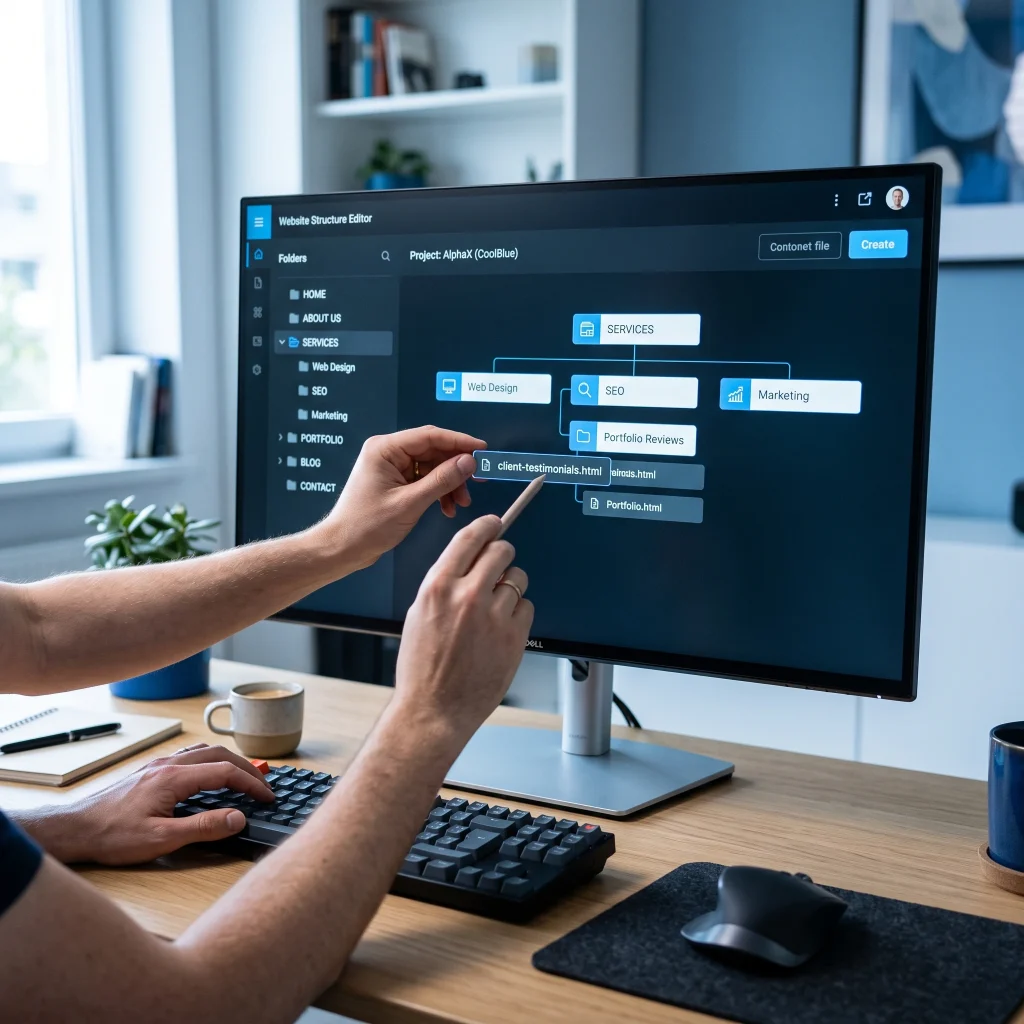
Even if you do build a site, many beginners misuse categories and tags, clutter it with junk plugins, or overload it with a bloated theme.
I’ve been there myself. In the early days, I had random one-off tags, such as “Valentine’s Day,” and categories that didn’t make sense.
Google viewed my site as a mess, which negatively impacted my rankings.
Back then, I didn’t understand categories or tags, and that showed in my site structure.
In 2026, Google wants clarity and structure.
And it’s not just Google anymore; Answer Engine Optimization (AEO) and Generative Engine Optimization (GEO) are becoming critical as AI search tools like ChatGPT, Perplexity, and Google’s AI Overviews pull content directly from structured, authoritative sites.
By combining content clusters with AEO/GEO tactics, you’re future-proofing your rankings in 2026 and beyond.
That means your categories should align with your main topics (like mine do now: Affiliate Marketing, Smart AI Tools, Social Media Mastery, etc.).
Tags should be limited to a small, consistent set across the site, not a new one for every post.
👉 Fix: Start with fast hosting (I use SiteGround) and a lightweight theme like GeneratePress.
Build your content into clusters with clear categories and use only tags that serve a genuine purpose. A well-structured site signals to Google that you’re building a brand, not a blog graveyard.
Affiliate Marketing Mistake 3: Failing To Create Quality Content

One of the deadliest mistakes I see beginners making in 2026 is treating affiliate marketing like a “numbers game.”
They believe that if they produce enough posts, something will eventually rank.
The result?
If this were 2015, that would probably have worked.
However, by 2026, that won’t be the case with Google.
A site filled with thin, shallow content, or worse, a handful of solid posts that go nowhere because they aren’t connected.
Most pages fail not because of SEO, but because the content itself isn’t helpful enough.
The sites that keep winning are the ones refreshing high-performing pages and focusing on value-driven, expert content — that’s what sustains rankings and engagement in today’s AI-driven landscape.
Here’s the truth: Google doesn’t just want content anymore.
It wants quality plus structure.
You can write the best 1,500-word post in the world, but if it sits alone like an island, it’s not going to perform.
Why?
Because in 2026, Google rewards topical authority, which comes from content clusters.
A cluster is simple: one pillar post (like a complete guide or playbook) supported by 3–5 smaller, related posts.
The pillar covers the big picture, while the supporting posts go deeper into specific questions.
Interlink them, and suddenly you’re not just publishing random articles, you’re building an ecosystem that readers and Google both love.
Without clusters, your site appears as a scattered collection of articles rather than a cohesive brand.
I made this mistake myself early on. I’d write random posts, hoping one would rank.
Some even did, but they didn’t build momentum because nothing tied them together.
Once I started grouping content into clusters, my rankings multiplied and traffic grew faster than ever.
👉 Fix: Don’t just aim for “more content”, aim for connected content. Build clusters around each of your main topics, with one pillar supported by 3–5 focused posts. Link them together naturally. This not only boosts SEO, but it also keeps readers engaged on your site — which means more trust, more clicks, and ultimately, more sales.
Affiliate Marketing Mistake 4: Not Building an Email List

If I had to pick the single biggest mistake most affiliates regret, it’s not building an email list sooner.
Social media platforms can wipe your audience overnight, but your email list?
That’s yours forever.
I was guilty of this, too.
For years, I relied only on my blog traffic.
Sure, I made sales, but every time Google updated its algorithm, I’d sweat bullets wondering if my site would tank.
Skipping email is a killer mistake.
Ignoring your email list is a huge miss; subscribers are the lifeblood of your business.
According to email marketing statistics from OptinMonster, every dollar spent on email generates an average return of $36, making it one of the most profitable channels in 2026.
That’s a lot of money you’re leaving on the table if you aren’t utilizing email marketing to grow your business in 2026.
When I finally started building my list, I realized the power of having direct access to my audience.
I could send a broadcast, and within hours, I’d have clicks, sales, and engagement, all without worrying about SEO or social reach.
In 2026, email is still the most profitable channel for affiliate marketers.
With tools like Kit (formerly ConvertKit), setting up a simple funnel is easier than ever.
Offer a freebie to deliver value and build trust.
👉 Fix: Don’t wait. Add opt-ins to your site, create a free lead magnet, and start growing your list today. Even if you only add 5–10 people a week, that list compounds over time. It’s your safety net, your relationship builder, and your sales machine
Tired of learning these lessons the hard way?
Every mistake on this list, I made because I was guessing. Wealthy Affiliate is where I stopped guessing — real training, real tools, and a community that catches your mistakes before they cost you months.
Read My Full Wealthy Affiliate Review →Affiliate Marketing Mistake 5: Chasing Shortcuts

If you’ve been in this space for more than a week, you’ve probably seen ads for “push-button affiliate systems” or “done-for-you sites.” Let me save you time and money: they don’t work.
Back in 2014, I fell for one of those “done-for-you business in a box” scams.
I spent money I didn’t really have, hoping it would fast-track my success.
Instead, I got a cookie-cutter site that looked like a thousand others, no traffic, and definitely no sales.
It was a painful but essential lesson; there are no shortcuts in affiliate marketing.
In 2026, trust is everything.
You can’t buy it, fake it, or hack it.
Affiliate marketing isn’t a shortcut hustle—it’s a rapidly growing, performance-based industry.
According to affiliate marketing statistics from DemandSage, the global market is projected to reach $27.78 billion by 2027, up from around $20 billion today, demonstrating that long-term consistency consistently outperforms quick fixes.
If your strategy is spamming links, buying fake traffic, or chasing loopholes, you’ll crash and burn.
The affiliates winning today are those playing the long game: creating content, building email lists, and consistently showing up.
👉 Fix: Ignore shiny objects and stick to proven fundamentals. Create real content, grow your email list, focus on SEO and social, and most importantly, build relationships with your readers. Success takes time — but it’s worth it.
To put it in perspective, here’s a side-by-side comparison of shortcuts that hold you back versus strategies that actually build success
Comparison: Affiliate Marketing Shortcuts vs Long-Term Success
❌ Chasing “get rich quick” hacks
❌ Copying or Thin AI Content
❌ Ignoring Email List Building
❌ Spammy backlinks / black-hat tricks
❌ Quitting after 2–3 months
✅ Building a solid website foundation
✅ Publishing helpful, problem-solving posts
✅ Growing and nurturing your subscribers
✅ Earning trust with transparency + value
✅ Staying consistent for 6–12+ months
As you can see, shortcuts may look tempting in the moment, but only long-term strategies create real, lasting affiliate marketing success.
Affiliate Marketing Mistake 6: Failing to Build Trust

This ties directly to everything we’ve discussed so far.
Affiliate marketing isn’t about tricking people into clicking links; it’s about building trust.
If your readers don’t trust you, they won’t buy.
Period!!.
I’ve seen bloggers write nothing but “Top 10 Best X” posts stuffed with affiliate links, and then wonder why nobody converts.
Trust is everything—people only buy from those they believe in.
Credibility isn’t optional; it’s essential.
The truth is, people are more intelligent now.
They can smell a sales pitch a mile away.
What they want is honesty, transparency, and proof that you actually care.
When I started sharing my story- the scams I fell for, the dead-end jobs, and the years of trial and error- that’s when people connected with me.
They saw I wasn’t some “guru” pretending to be perfect.
I was just a guy who struggled but figured it out.
That authenticity built trust, and trust led to sales.
👉 Fix: Be real. Share your story, your wins, and your lessons. Recommend only products you believe in or use yourself. Build relationships, not just clicks. Trust is your biggest asset in 2026.
Affiliate Marketing Mistake 7: Giving Up Too Soon

Finally, the mistake that kills more affiliate marketers than anything else: quitting too soon.
Most beginners give up within 3–6 months, right before results start to appear.
I made my first commission in 3.5 months and was full-time by month six, but only because I stayed consistent.
If I had quit at month two (like most people do), none of this would exist today.
I’ve had setbacks, algorithm hits, and plenty of moments where I questioned everything.
However, the difference between those who make it and those who don’t is persistence.
Success doesn’t come overnight—affiliate marketing is a long game.
The Edelman Trust Barometer found that 71% of consumers say trusting a brand is more important now than ever, and that trust takes time to build—so persistence and consistency are what truly pay off.
👉 Fix: Commit to at least 6–12 months before you even think about quitting. Set a content schedule, stick to it, and trust the process. Affiliate marketing is a marathon, not a sprint. The results compound over time, and if you stay consistent, 2026 can be your breakthrough year
How to Fix Affiliate Marketing Mistakes (Step by Step)

I made these same affiliate marketing mistakes when I first started back in 2013. Here’s the step-by-step process I used to fix them, build a solid foundation, and finally start earning consistent commissions.
- Pick The Right Niche
Focus on a passion or problem you can stick with, rather than chasing shiny objects. - Build A Solid Foundation First
Set up a simple website, clear structure, and disclosures before scaling traffic. - Create Quality, Helpful, Shareable Content
Publish posts that solve problems, answer questions, and build trust with readers. - Start Your Email List Early
Add an opt-in form and capture leads from day one to protect against algorithm shifts. - Stop Chasing Shortcuts
Stick to proven strategies and avoid get-rich-quick gimmicks that waste your time & hard earned money. - Focus On Building Trust
Be genuine, recommend only what you truly believe in, and let transparency prevail over hype. - Stay Consistent And Don’t Quit
Results compound over time — keep publishing, improving, and adjusting until it clicks.
My Closing Thoughts + Recommendations For You
Avoiding these mistakes will already put you ahead of most beginners. If you want to see the flip side – what it really looks like when everything goes right – check out my Affiliate Marketing Success guide.
And if you’re curious about the latest industry shifts, I’ve also broken down how affiliate marketing works in 2026.
There were massive shifts within the industry from 2023 to 2024.
In 2026, things have settled down, and new marketers, along with old-school marketers like myself, are trying to adapt to this new era.
But knowing what not to do is only half the battle. To actually build a business that works in 2026, you need a step-by-step plan to follow.
Lucky for you if you’re reading this post, as you’ll have an advantage over most beginners who are getting their feet wet and aren’t sure which direction to take.
I get asked a lot of the same questions whenever people start learning about affiliate marketing. To save you some time (and mistakes), I’ve put together quick answers to the most common ones below. These come straight from my own experience and what I see beginners struggle with the most.
❓ Affiliate Marketing Mistakes FAQ
What are the most common affiliate marketing mistakes in 2026?
From my own journey, the biggest mistakes I’ve made are picking the wrong niche, promoting random products, skipping the opportunity to build an email list, and quitting too soon. I made some of these early in 2013, but once I refined them, I finally achieved consistent affiliate income.
Why do beginners fail at affiliate marketing?
I failed at first because I expected fast money, spread myself too thin, and didn’t focus on building trust. Most beginners make the same mistake. Success comes when you treat it like a real business and stay consistent, even when results feel slow.
What are the biggest pitfalls new affiliates should avoid?
One of my biggest pitfalls was chasing shiny objects, bouncing from one program or strategy to the next. I wasted years. The better path is to pick one niche, one program, and build a simple system that you can scale. Focus beats distraction every time.
What common errors stop affiliates from making money?
The errors that stopped me for months were not tracking results, ignoring content quality, and failing to collect emails. Once I started measuring clicks, building an email list, and consistently publishing helpful posts, the money finally followed. Beginners can save time by fixing these early.
How do I fix affiliate marketing mistakes?
Start by picking the right niche, building a solid website foundation, and publishing helpful content. Then start your email list early, skip the shortcuts, focus on building trust, and stay consistent for at least 6–12 months. Those seven fixes turned my own results around.
The Bottom Line: Mistakes Are Optional — Quitting Is The Only Fatal One 🚀
Every mistake on this list cost me time, money, or both — and every single one was avoidable with the right guidance. You don’t have to learn the hard way like I did. This is the platform that taught me how to do it right, and it’s where I’ll personally help you skip the years of trial and error.
Skip The Mistakes — Start With Wealthy Affiliate →Still have questions? I’d love to answer them for you in the comments below.
I look forward to hearing from you guys and helping you in any way I can.
Until next time — stay focused, stay real.
Cheers, Your Friend,
Scott
Keep Reading: Build It Right The First Time
Now that you know what NOT to do, these guides show you what to do instead — the full beginner roadmap and how to pick programs that actually pay.
👉 My Affiliate Marketing Success Story — What’s Possible When It Clicks
👉 How To Find The Best Affiliate Programs — 7 Things You Must Know